
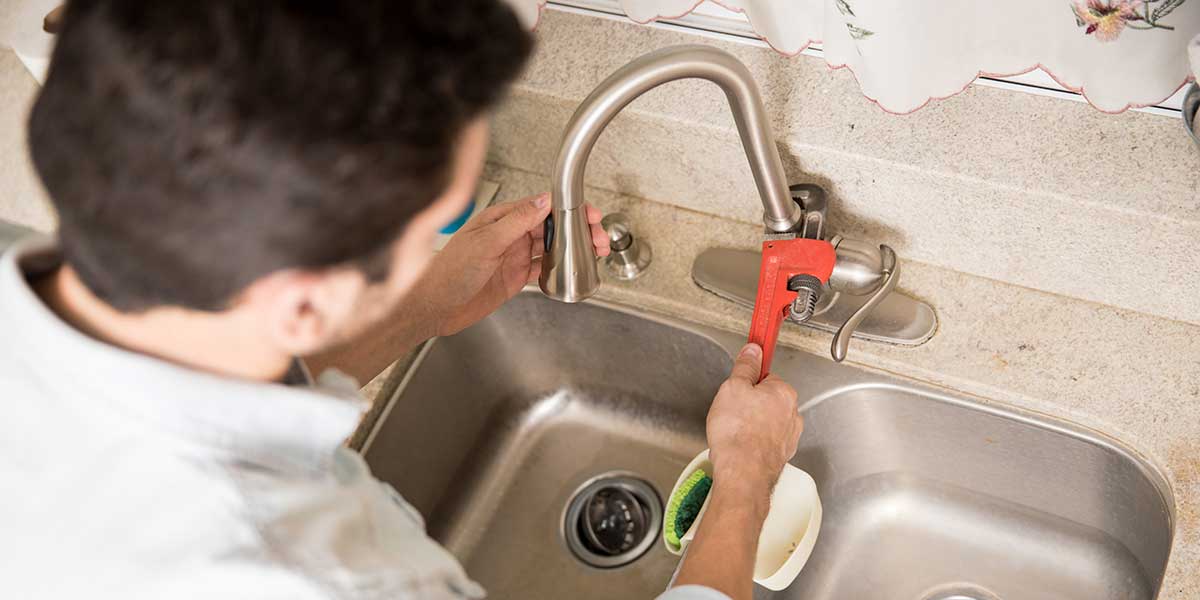
According to the EPA, the average household wastes more than 10,000 gallons of water each year due to leaking fixtures. That’s enough water to wash roughly 270 loads of laundry. Sometimes it takes days, weeks, or even months to discover a leaking fixture, and each day that passes adds to the water bill.
As professional plumbers in Bainbridge, GA, we respond to many calls from homeowners concerned about unexpectedly high water bills. The cause almost always comes back to a leak somewhere.
In this blog post, we answer the question, “Why is my faucet leaking?” You’ll learn about the anatomy of plumbing fixtures, how to diagnose a leaking fixture, and how to temporarily handle an emergency leak before a professional plumber arrives.
If you’re still having trouble understanding why your faucet is leaking after reading, or you’re ready to schedule a repair, call Cooper’s Plumbing & Air at (866) 464-7132 to get help from a licensed plumber.
The Anatomy of a Faucet
To answer the question, “Why is my faucet leaking?” it helps to first understand the anatomy of plumbing fixtures. Knowing how the parts inside a faucet work together makes it easier to spot where leaks start and how to act in an emergency when you need to shut the water off before plumbers arrive.
The list below breaks down the main parts of a typical faucet in the order in which water flows through them.
- Shut-off valves: Control the flow of water to the fixture and allow you to stop the water before making repairs.
- Supply lines: Carry water from the shut-off valves up into the faucet body.
- Cartridge or valve stem: Regulates water flow and temperature, and often causes leaks when worn or damaged.
- O-rings and seals: Create tight connections between moving parts to prevent water from escaping.
- Spout and aerator: Direct water from the faucet and help control pressure and splashing.
Once you understand how these parts work together, you’ll have a better idea of what a plumber might point out to you when encountering any issues.
Common Problems That Cause Faucets To Leak
As you’ve just learned, faucets have several internal parts, creating multiple points where problems can start. If you’re not a professional plumber with the right training and tools, answering the question, “Why is my faucet leaking?” isn’t always straightforward. The sections below explain four common causes of a leaking faucet.
Worn Internal Parts
Many faucet leaks start inside the fixture itself. Over time, a worn-out washer, a damaged O-ring, or a faulty cartridge can cause the seal to fail. When these parts wear down, the faucet fails to seal completely, and water continues to drip from the spout.
Loose Handle
Leaks around the base or handle often point to a loose faucet handle. Daily use can cause screws and connections to shift, creating small gaps where water can escape. You might notice moisture around the handle or hear slight movement when turning the faucet on and off.
Corroded Valve Seat
The valve seat connects the faucet to the spout and helps control water flow. When minerals accumulate or corrosion forms, the valve seat can no longer form a tight seal. This usually causes dripping from the spout even when the faucet appears fully shut off.
High Water Pressure
Some faucet leaks have nothing to do with worn parts at all. High water pressure places constant stress on fixtures and internal components. When pressure remains too high, seals wear out faster, and leaks become more likely throughout the home. If multiple faucets drip or you notice banging pipes, excessive water pressure may be the underlying issue.
Steps for Diagnosing the Cause of a Leaky Faucet
The best person to answer the question “Why is my faucet leaking?” is a professional plumber with the training, experience, and tools to accurately identify the problem. The steps below outline how plumbers identify the source of a leak before recommending a repair.
- Inspect visible leak locations: Check for dripping at the spout, base, or around the handle.
- Check handles and connections: Look for loose or worn hardware that allows water to escape.
- Shut off the water supply: Stop water flow to safely inspect internal components.
- Disassemble the faucet: Examine washers, O-rings, and the faucet cartridge for damage or wear.
- Inspect the valve seat: Look for corrosion or mineral buildup that prevents a tight seal.
- Test water pressure: Confirm whether high water pressure contributes to ongoing leaks.
Once the source of the leak is clear, the right repair becomes much easier to identify. If your faucet continues to leak or you want a professional diagnosis about this or any other sink problems, call Cooper’s Plumbing & Air to schedule a service visit and get the issue resolved properly.
Stopping Emergency Leaks Before Cooper’s Plumbing & Air Arrives
A leaking faucet can turn into an emergency fast when water starts pooling, soaking cabinets, or spreading across floors. Acting quickly helps limit damage before a plumber arrives. Start by cutting the water supply at the shut-off valves under the sink. If the leak continues, close the main water valve to stop water flow to the fixture. Open the faucet to release pressure in the line and slow any remaining dripping.
Next, contain the water using towels, buckets, or a shallow pan to protect cabinets, floors, and nearby surfaces. Clear out items stored under the sink or around the fixture so they do not absorb water or block access to the leak. Avoid taking the faucet apart, since disassembly can make the problem worse without the right tools or replacement parts.
Call Cooper’s Plumbing & Air for Leaky Faucet Repair in Bainbridge, GA
If you’re still having trouble answering the question, “Why is my faucet leaking?” after reading this blog post, call Cooper’s Plumbing & Air at (866) 464-7132 to schedule leaky faucet repair in Bainbridge, GA.
Make sure you check out our other blog post on common water leak problems. You’ll learn about the consequences of letting a leak go unnoticed, including mold growth, higher water bills, and damage to your plumbing system.