
When summer heat sets in, nothing feels better than walking into a cool, comfortable home. But if you’re considering a new cooling system from Cooper’s Plumbing & Air, you may be stuck on whether a ductless mini-split or central air is the better option.
Both systems have their perks, but they’re designed differently and work best in certain situations. Let’s break down the distinctions between central air and mini-splits so you can make a confident choice.
What Is Central Air Conditioning?
Central air conditioning is what most people picture when they think of home cooling. A central AC system uses ductwork hidden in your walls, attic, or basement to deliver cool air throughout the house. It’s typically also connected to the furnace, allowing you to switch between heating and cooling.
The process is pretty straightforward: The indoor condenser unit pulls in warm air from your home, and the evaporator coil extracts the heat. That heat then travels through the coils to the outdoor compressor unit, which releases the warm air. A fan pushes the cooled air through the ductwork and out the vents into each room.
A well-designed central air conditioning system provides even cooling to every room in your home, all controlled by a single thermostat. It’s a sleek and discreet option, since the only visible part of the system is the outdoor unit. Everything else is hidden behind walls and in the attic or utility room.
That said, the need for ductwork is the big catch with a central air conditioner. If you want to install a new system and don’t already have the ductwork, setting one up can be costly and messy.
What Is a Ductless Mini-Split System?
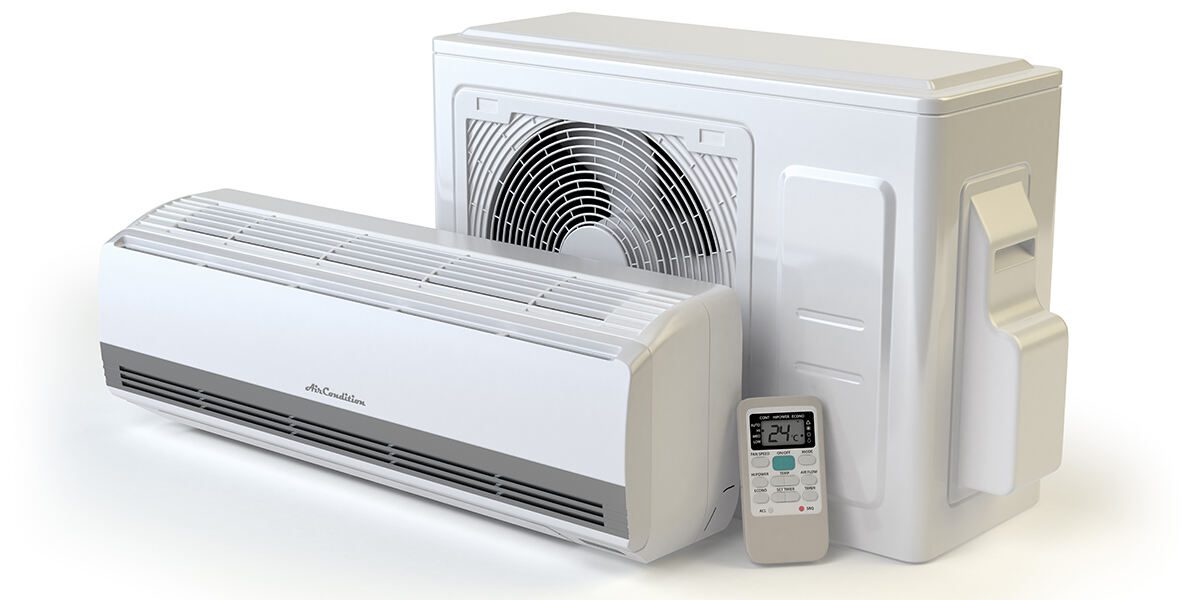
Ductless air conditioners, on the other hand, eliminate the need for ducts. Instead, these systems have an outdoor unit that connects to one or more air handling units indoors, which are usually mounted high on a wall. Each indoor unit controls the temperature in its specific room or zone, providing targeted comfort.
Not needing ductwork is a big selling point for many homeowners, especially those adding or upgrading their cooling systems. The lack of ductwork can also help improve energy efficiency, as there is no potential for cooled air to escape. The ability to set a different temperature in every room is another advantage, as it not only increases comfort but also helps slash energy consumption.
The big drawback to these units in the battle of ductless mini-split vs. central air? The indoor units are visible and occupy wall space. Not all homeowners like this look and would prefer to hide their HVAC equipment.
Ductless Mini-Split vs. Central Air: The Key Differences
When weighing cooling options, consider a few additional differences.
Installation
Ductless mini-split installation is considerably less disruptive than putting in a new central air conditioning system. It only requires a small hole for running the refrigerant line to the outdoor unit. If your home doesn’t have space for ducts, you don’t want to invest in a major construction project, or you’re trying to cool an addition, a mini-split is the most cost-effective option.
Cost
If you need to install ductwork for a central air conditioner, the overall cost will be significantly higher than for a ductless mini-split, despite the lower price tag on the actual equipment.
Efficiency
Ductless mini-splits offer exceptional energy efficiency. Even efficient central air conditioners can experience energy loss from duct leaks.
Comfort Control
Older central air conditioners typically have a single thermostat to control the entire house, which can require some compromises to ensure everyone’s comfort and uses more energy. Newer zoned systems solve this issue, but installing one is more expensive and complex.
With a ductless mini-split, each indoor unit has its own remote or thermostat, so everyone gets their preferred temperature, and you don’t waste money cooling rooms that no one’s using.
The Bottom Line: Pros and Cons of Mini-Splits vs. Central Air
What are the main takeaways from this ductless mini-split vs. central air comparison?
A central air conditioner is a hidden system that offers a clean look and consistent cooling. However, it requires ducts (which can be expensive if not already installed), is potentially less energy efficient, and lacks the same zoning flexibility.
A ductless mini-split doesn’t require ducts, which makes installation simpler and allows for highly energy-efficient zoned comfort in individual rooms. However, you may need multiple units for larger rooms, and the upfront cost is higher. The units are also visible, which isn’t ideal for every homeowner.
With these points in mind, when choosing between ductless and central AC, ask yourself a few questions to make the best decision.
- Do you already have ducts? If yes, central air conditioning might be the more affordable option.
- Is your home older or ductless? A ductless mini-split could save you the cost and hassle of installing ductwork.
- Do you want room-by-room control? Mini-splits give you that flexibility.
- Do you prefer a cleaner, vent-only look? Central air conditioning may be more appealing.
There’s always the option to combine the two systems; for example, keeping central air but adding a mini-split to cool a sunroom or new addition. When considering ductless mini-split vs. central air, think about what matters most to you: the look, the cost, or the level of control you want.
Call Cooper’s Plumbing & Air for Expert Guidance on Ductless vs. Central Air Systems
Neither a ductless mini-split nor a central air conditioning system is “better” across the board or perfect for every situation. It really comes down to your home’s setup (including venting for ductless air conditioners), your comfort preferences, and your budget.
If you’re still feeling stuck on the differences between central air and mini-splits, you don’t have to figure it out alone. The Cooper’s Plumbing & Air team can explain the options, recommend the best system, and handle installation.
Call us today at (866) 464-7132 to schedule your consultation and take the first step toward a cooler, more comfortable home.