Will the R-410A phase-out affect how you maintain your air conditioner in the coming years? With refrigerant regulations changing, it’s worth understanding what lies ahead.
As the go-to crew for AC repair in Tallahassee, we at Cooper’s Plumbing & Air help property owners make sense of the transition. Learn more about it here.
What Is R-410A?
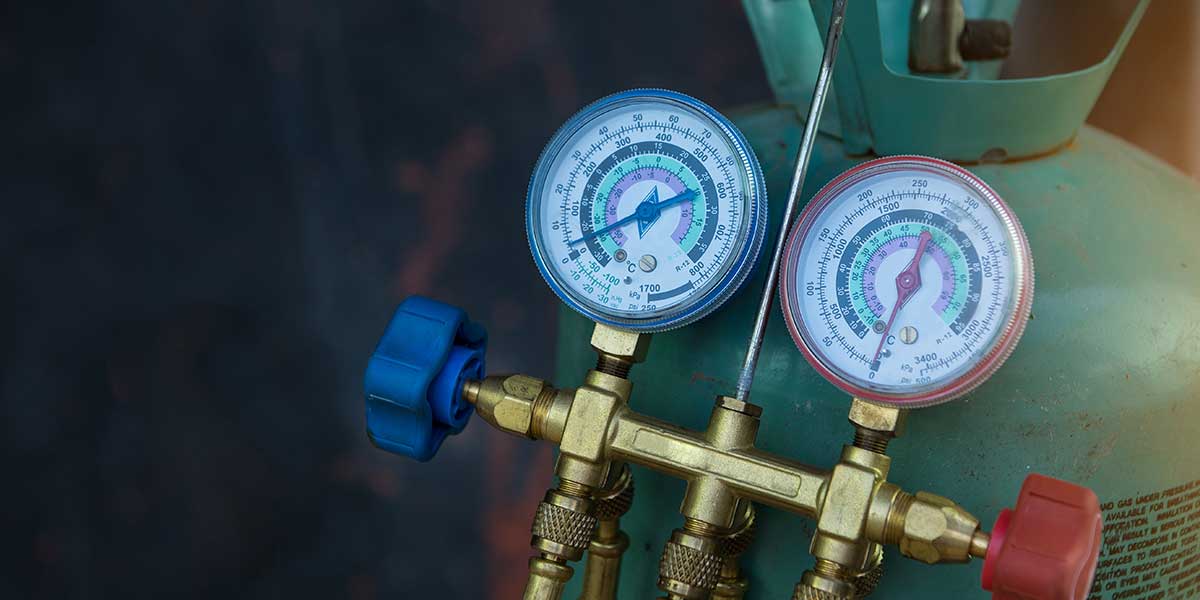
Your air conditioner relies on refrigerant to move heat from inside your property to the outdoors. For many systems installed over the past two decades, that refrigerant is R-410A. This hydrofluorocarbon (HFC) blend consists of two refrigerants, R-125 and R-32, and it runs in a closed-loop system through a process known as the refrigeration cycle.
Unlike its predecessor, R-22, R-410A requires equipment built to withstand higher operating pressures. It’s also classified as an A1 refrigerant, meaning it has low toxicity and doesn’t propagate flames under standardized testing conditions.
Why Is the Government Phasing Out R-410A?
You might remember the phase-out of R-22 (also known as Freon) because its chlorine content damaged the ozone layer. The US officially ended production and import of newly manufactured R-22 in 2020.
R-410A became a popular replacement because of its chlorine-free composition, so why is the government placing restrictions on it now?
The concern stems from its global warming potential (GWP), which measures how strongly a greenhouse gas warms the atmosphere relative to carbon dioxide. Since R-410A’s approximate GWP is 2,088, its environmental impact is substantially greater than carbon dioxide’s when released into the atmosphere.
Restrictions Under Way
The R-410A refrigerant phase-out falls under the American Innovation and Manufacturing (AIM) Act. It directs the Environmental Protection Agency (EPA) to reduce HFC consumption and production. Most imported or newly manufactured light commercial and residential air-conditioning equipment has been subject to a 700 GWP limit since January 1, 2025.
A May 2026 EPA rule also removed the federal installation deadline for qualifying R-410A systems whose specified components were imported or manufactured before the start of last year. The manufacturing restrictions still apply.
How To Find Out Which Refrigerant Your AC Uses
If you’re not sure whether the R-410A phase-out will impact your climate control needs, you can usually find the answer without taking anything apart.
Check the Outdoor Unit’s Label
Look for the manufacturer’s data plate, typically attached to the condenser housing. It should identify the serial number, model number, factory charge, and refrigerant type.
If you see R-410A or a trade name like Puron, Genetron AZ-20, or Suva 410A, the regulatory updates apply to your unit.
Review Your Equipment Records
Your owner’s manual or installation paperwork may identify the refrigerant your system uses. Previous service invoices are another useful reference, especially if a technician has already performed refrigerant-related work.
You can also have an HVAC professional verify the specifications if you’re still unsure.
How the R-410A Phase-Out Affects Homeowners
Government regulations may seem far removed from your everyday life, but their effects eventually reach the equipment you rely on at home. Understanding where your air conditioner fits into the changing market can help you make better decisions regarding your comfort.
You Can Keep Using Your Existing Air Conditioner
The phase-out doesn’t prohibit you from using your current R-410A unit. You can continue using it throughout its operational lifespan, and a qualified technician can still service it.
The restrictions primarily affect the production of refrigerants and newer cooling equipment rather than forcing homeowners to retire their existing units.
R-410A Refrigerant Availability and Costs May Affect Your Repair Bills
As federal HFC production allowances decline, supplies of newly manufactured R-410A become more limited. This will likely drive up prices over time.
Suppose your air conditioner develops a refrigerant leak during a swelteringly hot summer. A technician may need to locate it and repair the damaged component before adding R-410A. Depending on the amount needed, the refrigerant itself may account for a considerable portion of the repair bill.
Keep in mind that the R-410A phase-out won’t impact every service. Replacing a faulty capacitor, for example, generally doesn’t require opening the sealed refrigerant circuit.
You Have To Weigh Your R-410A Air Conditioner Replacement Options
You may still encounter discounted R-410A equipment manufactured before 2025, which is legal to install under current federal rules. While the lower price may seem attractive, consider how declining refrigerant supplies might affect servicing costs over the system’s lifespan.
If you plan to replace only the outdoor unit, check whether it’s compatible with your existing indoor coil. Ask your contractor to explain the applicable HVAC system upgrade requirements and provide an AHRI certificate confirming the proposed equipment combination is certified, particularly when you’re keeping older components.
Alternative Refrigerants for Residential AC Systems
If your existing R-410A system is aging and increasingly expensive to repair, upgrading to equipment designed for newer refrigerants may make better financial sense. Take the time to compare installation expenses with potential energy savings and future maintenance needs when shopping around the market.
You’ll likely encounter these two popular options:
- R-454B: With a GWP of approximately 466, this blend of R-32 and R-1234yf has a substantially lower climate impact than R-410A. Many newer centralized units use it, and its A2L safety classification indicates mild flammability under standardized testing conditions.
- R-32: This single-component refrigerant has an approximate GWP of 675 and is used in modern cooling equipment, including certain ductless mini-splits. It also carries an A2L classification and offers efficient heat-transfer performance.
Air conditioners using these refrigerants can deliver comparable cooling performance to R-410A models, with some newer systems offering better energy efficiency.
Keep Your Cooling System in Capable Hands
Cooper’s Plumbing & Air has served the Tallahassee area since 1997, providing tailored AC repair and installation services with flat-rate pricing and a satisfaction guarantee. Whether your climate control system needs attention or you’re considering a replacement, our crew can help you understand the R-410A phase-out and evaluate your options.
Contact us at (833) 321-6350 today to schedule service and discuss your property’s cooling needs. We also encourage you to explore more of our blog to learn about 14 vs. 16 SEER ratings.


